
Choosing among Moroccan produce suppliers involves more than comparing prices. An international importer needs to know who will sell the goods, which specifications will apply, how quality and traceability will be documented, and what happens if an order does not match the agreement.
Morocco offers a variety of fresh fruits and vegetables for wholesale sourcing, but a suitable supplier for one product or destination may not be the right fit for another. This guide provides a practical evaluation method for importers, distributors, and procurement teams looking for reliable commercial arrangements.
Important distinction: MoroccanProduce.com is a produce trading business. We research suitable Moroccan supply options, buy from Moroccan suppliers, and resell produce to international buyers under agreed terms. We are the buyer’s commercial seller, not simply a directory that introduces buyers to farms.
What type of Moroccan produce supplier do you need?
Before requesting quotations, clarify the type of business relationship you want. The term supplier can describe different roles, and each has implications for contracts, quality control, and communication.
| Supply model | What to clarify |
|---|---|
| Grower or producer | Which products they grow, harvest windows, grading arrangements, and whether they can sell under the required terms. |
| Packing or export business | Which goods they handle, how lots are identified, what packing services are offered, and who is the contractual seller. |
| Wholesale trading business | How it sources products, verifies specifications, prepares quotations, and remains accountable as the commercial seller. |
None of these models is automatically better. The right choice depends on your purchasing volume, products, destination market, and how much sourcing coordination you want to manage yourself.
1. Start with your buying specification, not a price request
A request such as “Please send your best price for Moroccan vegetables” leaves too many variables open. Two sellers can quote different products, grades, or delivery terms while appearing to offer the same thing.
A useful request for quotation (RFQ) includes:
- Product: fruit or vegetable, variety or commercial type, and intended use.
- Quality: grade, size or calibre, maturity, acceptable defects, and customer-specific requirements.
- Quantity: net weight, expected frequency, and whether this is a trial or recurring order.
- Packaging: carton, crate, punnet, labelling, pallet configuration, and net weight per pack.
- Timing: preferred shipping or receiving window, with flexibility if possible.
- Destination: country and delivery point, including any specific retailer or import requirements.
- Commercial terms: preferred delivery basis and any payment or inspection conditions.
For example, buyers interested in Moroccan tomatoes should specify the tomato type, size, packing format, and target market. A buyer seeking Moroccan blueberries may need to discuss punnet size, cold-chain handling, and shelf-life expectations. These are different procurement questions, even when both products come from Morocco.
2. Verify the business identity and the actual seller
Ask who will issue the quotation, invoice, and sales agreement. Confirm the legal business identity, relevant contact details, and which entity will receive payment. For a first transaction, request appropriate business documentation and check it through reliable, independent channels where practical.
Questions worth asking include:
- Which legal entity is responsible for the sale?
- Who confirms the product specification and accepts the order?
- Who handles questions or claims after delivery?
- Will the seller purchase and resell the goods, or only introduce another company?
- How will bank details and any later changes be verified?
A professional website and attractive photographs are useful for discovering a potential supplier, but they are not substitutes for commercial verification. Equally, a small business should not be dismissed simply because it does not claim to own farms or warehouses; what matters is whether its role and obligations are clear.
3. Evaluate product expertise and seasonal fit
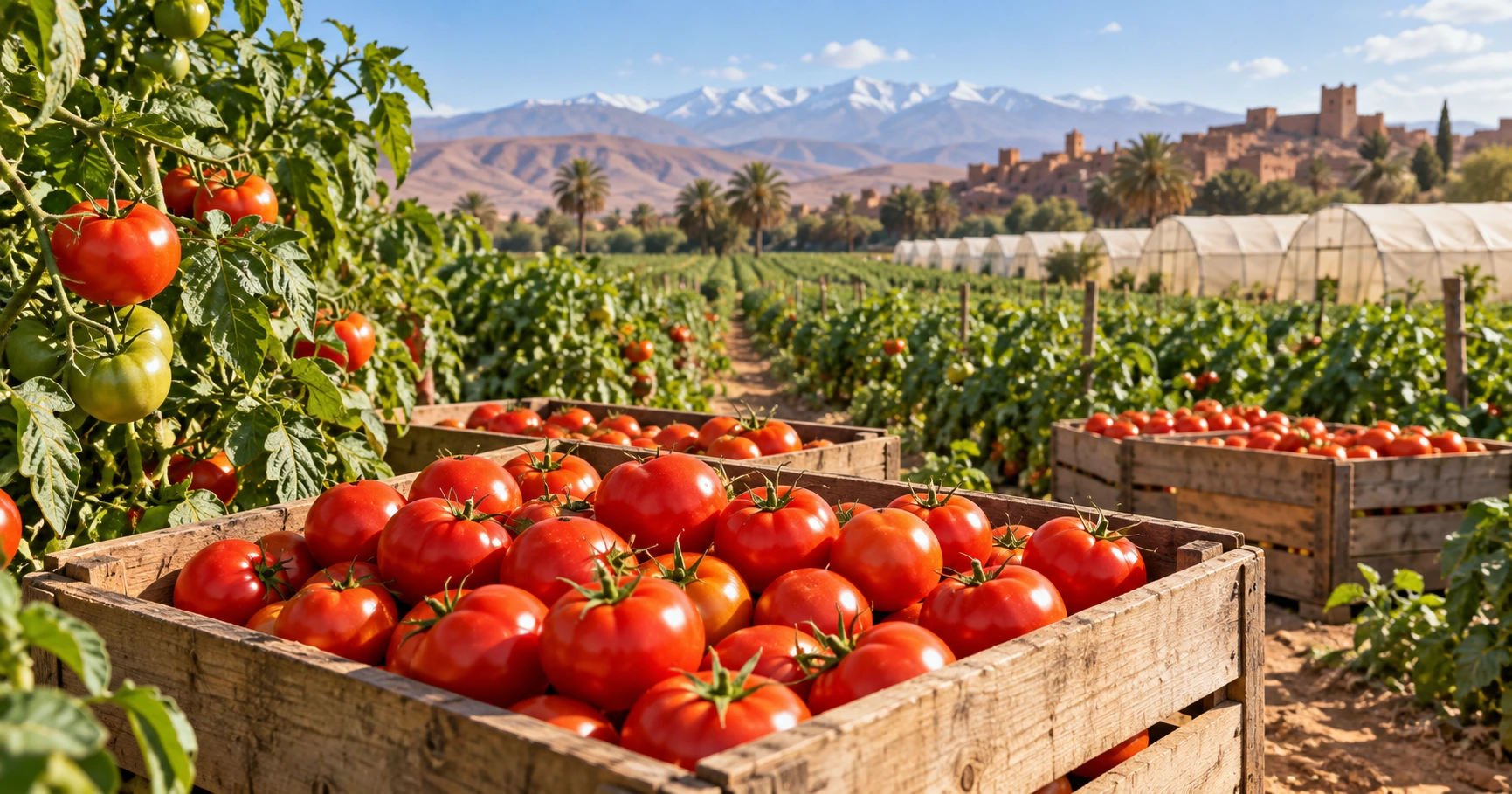
Strong sourcing conversations are specific. A seller should be able to discuss the requested product’s variety, quality attributes, potential packaging, and the information still needed to prepare a quotation. Be cautious when every product is described as “always available” without any qualification.
Seasonality is particularly important for fresh produce. Harvest timing, weather, grade distribution, and demand can affect what can be sourced at a given moment. Consult our Moroccan produce seasons overview to plan enquiries, then verify actual availability for your dates and specifications.
Buyers purchasing several commodities should also ask whether the proposed sourcing plan involves separate suppliers or packing locations. Multiple products do not necessarily share the same harvest, inspection, or transport arrangements.
4. Ask how quality will be defined and checked
Words such as “premium”, “export quality”, or “Class I” are not enough unless everyone agrees on their meaning and the applicable standard. Request measurable product specifications and agree on the inspection approach before the order is confirmed.
Use written specifications
Depending on the commodity, a written specification may address calibre, colour, maturity, firmness, defects, tolerances, packaging condition, and temperature expectations. Include any buyer-specific requirements that go beyond general commercial descriptions.
Understand destination-market marketing standards
For products marketed fresh in the European Union, EU fruit and vegetable marketing standards set general requirements, while specific standards apply to certain products, including citrus fruit, sweet peppers, and tomatoes. A buyer should confirm which rules apply to the precise commodity and transaction. This is separate from any additional retailer specification.
Agree on inspection and claims
Discuss whether inspections, samples, photographs, or independent checks are appropriate. Decide how a discrepancy will be documented, the timeframe for reporting it, and the agreed commercial response. A photograph alone may not establish the condition of an entire shipment.
5. Check traceability and requested documentation
Traceability means being able to connect goods and records to the relevant business operators and lots. Ask what origin, lot, packing, and transaction information can be supplied for the proposed shipment.
For EU food businesses, the European Commission explains the one-step-back, one-step-forward traceability principle under general food law. Additional requirements can apply to particular products or supply chains. Confirm the records required for your market and role as importer.
Certifications also require care. If your customer requests a named certification, ask for valid evidence relevant to the actual business, product, or facility and check its scope. Never assume a certificate exists because a logo appears on a website.
For Moroccan export-side procedures, ONSSA provides information on official import and export controls. Required sanitary or phytosanitary documentation depends on the goods and destination. Your customs or regulatory adviser should confirm the current requirements before shipping.
6. Compare packaging and cold-chain arrangements
Packaging affects handling, presentation, and protection in transit. Discuss the actual packing unit, net weight, label content, pallet configuration, and suitability for the expected transport route. Where needed, ask for an example of the proposed carton or label specification.
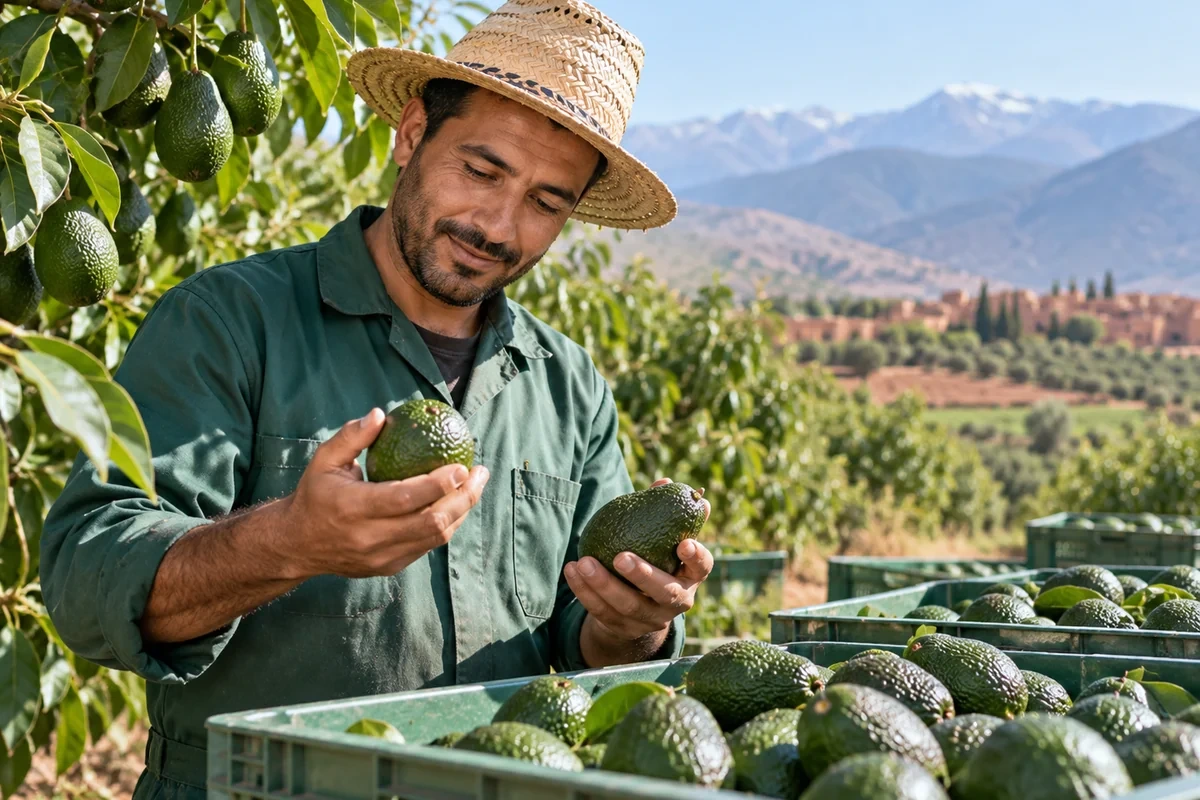
Fresh produce is not one uniform category. Tomatoes, citrus, avocados, and berries can have different handling sensitivities. Request commodity-specific temperature and transport arrangements rather than accepting an unexplained claim that “everything ships refrigerated”.
If a product will pass through several warehouses or carriers, clarify who coordinates each handover and how deviations or delays will be communicated. A written logistics plan is more useful than an unqualified promise of perfect freshness.
7. Compare quotations on the same commercial basis
The cheapest quoted price may not be the cheapest purchase once packaging, transport, losses, and import costs are considered. Compare offers line by line and ask what is included.
| Comparison point | Buyer question |
|---|---|
| Product specification | Are the variety, grade, size, and tolerances equivalent? |
| Net quantity | Is the price per net kilogram, carton, pallet, or another unit? |
| Packaging | Which cartons, labels, and pallet materials are included? |
| Price validity | How long does the offer remain valid, and what can change it? |
| Delivery basis | What is the named place and agreed Incoterms® rule? |
| Documents | Who arranges the required documents and inspections? |
| Payment and claims | What is due, when, and how are disputes handled? |
Make sure the parties agree on the delivery term and named location. Incoterms® rules help allocate certain transport responsibilities, costs, and risks, but they do not replace the rest of the sales contract.
8. Look for warning signs without expecting impossible guarantees
Risk assessment should be practical, not based on a single impression. The following issues deserve further questions before you commit funds or confirm a shipment:
- The business will not identify the legal seller or provide a clear quotation.
- Payment details change unexpectedly and cannot be independently confirmed.
- Specifications remain vague despite repeated requests.
- All grades, volumes, and delivery dates are promised without checking availability.
- Certifications are advertised but supporting evidence is not available for review.
- There is no agreed process for inspection, rejected goods, or delivery discrepancies.
- The proposed documents or delivery terms do not match the destination-market requirements.
Not every unanswered question is evidence of misconduct. Sometimes the seller simply needs time to research an unfamiliar specification. What matters is whether uncertainties are explained and resolved before you accept the order.
9. How MoroccanProduce.com works with wholesale buyers
MoroccanProduce.com offers a direct trading relationship for international wholesale buyers. Rather than presenting an unverified catalogue of fixed stock, we start with the buyer’s requirements and research appropriate Moroccan sourcing options.
- Send your requirements. Share the product, quantity, destination, delivery window, and preferred packaging or quality criteria.
- We assess sourcing options. We research Moroccan suppliers and evaluate the relevant availability, specifications, packing possibilities, and costs.
- We prepare an offer. We quote based on the available information and proposed commercial conditions.
- We agree on the transaction. When the order terms are confirmed, MoroccanProduce.com buys from the Moroccan supplier and resells to the international buyer as the commercial seller.
Specific availability, documents, certifications, and logistics arrangements must be verified for each order. For more about the process, see our For Buyers page. You can also explore the Moroccan fruits and vegetables we cover.
Wholesale buyer checklist: 12 questions to ask a supplier
- Who is the legal seller and who will invoice us?
- Can you confirm the requested product variety and quality specification?
- What quantity and delivery window can be quoted?
- What origin and lot information will accompany the goods?
- How will quality be inspected or evidenced?
- What packaging and labelling formats can be offered?
- Which certifications are requested, and can their validity and scope be verified?
- Which documents apply to this product and destination?
- What are the price basis, currency, and quotation validity?
- Who arranges transport, insurance, and import formalities?
- What are the payment and claims procedures?
- Who will remain responsible for commercial follow-up after the order?
Keep written answers with the quotation and purchase documentation. For recurring orders, revisit the specification and supplier assessment when the product, season, or destination changes.
Frequently asked questions about Moroccan produce suppliers
How do I find Moroccan produce suppliers for wholesale orders?
Start with a detailed RFQ and evaluate the seller’s identity, product knowledge, quality process, documentation, and commercial terms. MoroccanProduce.com can research suitable sourcing options and quote as your direct seller.
Should I buy directly from a Moroccan grower or from a trading company?
Either model may be appropriate. A grower relationship may suit a specific product program, while a trading company can coordinate sourcing and act as your commercial seller. Confirm responsibilities rather than assuming one model is always better.
Can a supplier guarantee year-round availability?
Availability depends on the product, variety, season, specification, and market conditions. Ask for a quotation for your required delivery window instead of relying on a general promise.
What certifications should I request from a Moroccan produce supplier?
That depends on the destination, product, and buyer or retailer requirements. Request evidence for any certification that is relevant and verify its validity and scope. Do not confuse optional commercial certifications with legally required documents.
How can I compare offers from different Moroccan suppliers?
Use the same written specification and compare net weight, packaging, delivery basis, documentation, payment terms, and claims procedures. A price alone does not establish whether offers are equivalent.
Does MoroccanProduce.com sell directly to international buyers?
Yes. MoroccanProduce.com researches Moroccan sourcing options, purchases produce from suppliers, and resells it to international buyers under agreed commercial terms. Contact us with your product and shipment requirements to request a quotation.
Request a Moroccan wholesale produce quotation
Looking for a Moroccan produce supplier for your next wholesale order? Tell us the products you need, quantity, destination, preferred delivery period, and packaging or quality requirements. MoroccanProduce.com will research suitable supply options and prepare a quotation based on the details available.