
What are some common vegetables in Morocco? Tomatoes, potatoes, onions, carrots, peppers, courgettes (zucchini), aubergines (eggplants), cucumbers, green beans and leafy greens are familiar ingredients in Moroccan kitchens and markets. They are used in everyday dishes such as tagines, couscous, salads and cooked vegetable preparations.
For international buyers, it is important to distinguish vegetables commonly grown or eaten in Morocco from those that can be sourced in a particular grade, volume and packaging format for export. Not every common local vegetable is automatically available as an export-ready wholesale shipment.
This guide introduces popular Moroccan vegetables, explains their culinary and agricultural context, and shows importers how to prepare practical sourcing enquiries. MoroccanProduce.com researches Moroccan suppliers, purchases produce and resells it to international wholesale buyers under agreed terms. We do not claim owned farms, fixed stock, universal product availability or unverified certifications.
Common vegetables in Morocco at a glance
Moroccan vegetable markets offer a wide range of fresh produce. The following examples are familiar in domestic cooking and commercial trade, although varieties and seasonal availability vary.
| Vegetable | Common use in Morocco | Wholesale buyer considerations |
|---|---|---|
| Tomatoes | Salads, sauces, tagines and cooked dishes | Commercial type, colour, maturity, firmness, calibre and pack. |
| Potatoes | Tagines, stews, fried and roasted dishes | Variety, intended use, size, skin condition and storage. |
| Onions | Base ingredient for many savoury dishes | Colour, size, dryness, firmness and pack weight. |
| Carrots | Couscous, tagines and cooked salads | Length, diameter, uniformity, freshness and presentation. |
| Sweet peppers | Salads, grilled dishes and cooked preparations | Type, colour, shape, calibre and skin condition. |
| Courgettes / zucchini | Couscous, tagines and vegetable dishes | Length, diameter, maturity and damage tolerance. |
| Aubergines / eggplants | Zaalouk and other cooked dishes | Shape, size, firmness and external appearance. |
| Cucumbers | Fresh salads and raw vegetable dishes | Length, shape, colour, firmness and packing. |
| Green beans | Cooked vegetables, tagines and side dishes | Pod size, tenderness, freshness and defect tolerances. |
| Leafy greens | Cooked greens, soups and regional dishes | Exact species, cleanliness, shelf life and handling. |
This table is a descriptive guide, not an export catalogue. Availability and suitability for a buyer’s market must be checked for the exact product and shipment.
1. Moroccan tomatoes
Tomatoes are among the most recognizable vegetables associated with Moroccan agriculture and cooking. They appear in fresh salads, sauces, tagines and many everyday dishes. For commercial buyers, the term “tomato” covers several product types rather than one uniform specification.
Wholesale enquiries should identify whether the customer wants round, elongated, ribbed, cherry or another tomato type, along with maturity, colour stage, firmness, calibre and packaging. Tomato varieties and production systems differ, so buyers should not assume every type is available on the same schedule.
See our Moroccan tomatoes product page and detailed tomato importing guide.
2. Potatoes
Potatoes are a staple in many Moroccan households. They can be included in tagines and stews or served fried, boiled or roasted. Different potato varieties have different culinary and commercial characteristics, including texture, skin, size and suitability for particular uses.
An importer should specify the intended use, preferred variety if known, size range, skin condition, maturity and packaging. Storage and transport conditions also matter. A domestic market reference for potatoes should not be treated as proof of export-ready supply at the requested quality.
3. Onions
Onions are fundamental to Moroccan cooking, where they form the base of many savoury preparations. Red and other onion types can be found in markets, but commercial requirements depend on the intended customer.
Wholesale specifications may cover onion type and colour, diameter, firmness, dryness, sprouting, damage tolerance and net weight per bag or carton. Buyers should ask how the proposed lot has been handled and whether its condition suits the intended journey.
4. Carrots
Carrots are familiar in Moroccan couscous, tagines and cooked salads. For fresh wholesale buying, their commercial value depends on more than the fact that they are widely consumed.
Define the requested length and diameter range, shape, appearance, freshness, cleanliness and packaging. Clarify whether the customer expects topped or bunched carrots, if relevant. These presentations should not be assumed available without supplier confirmation.
5. Moroccan sweet peppers
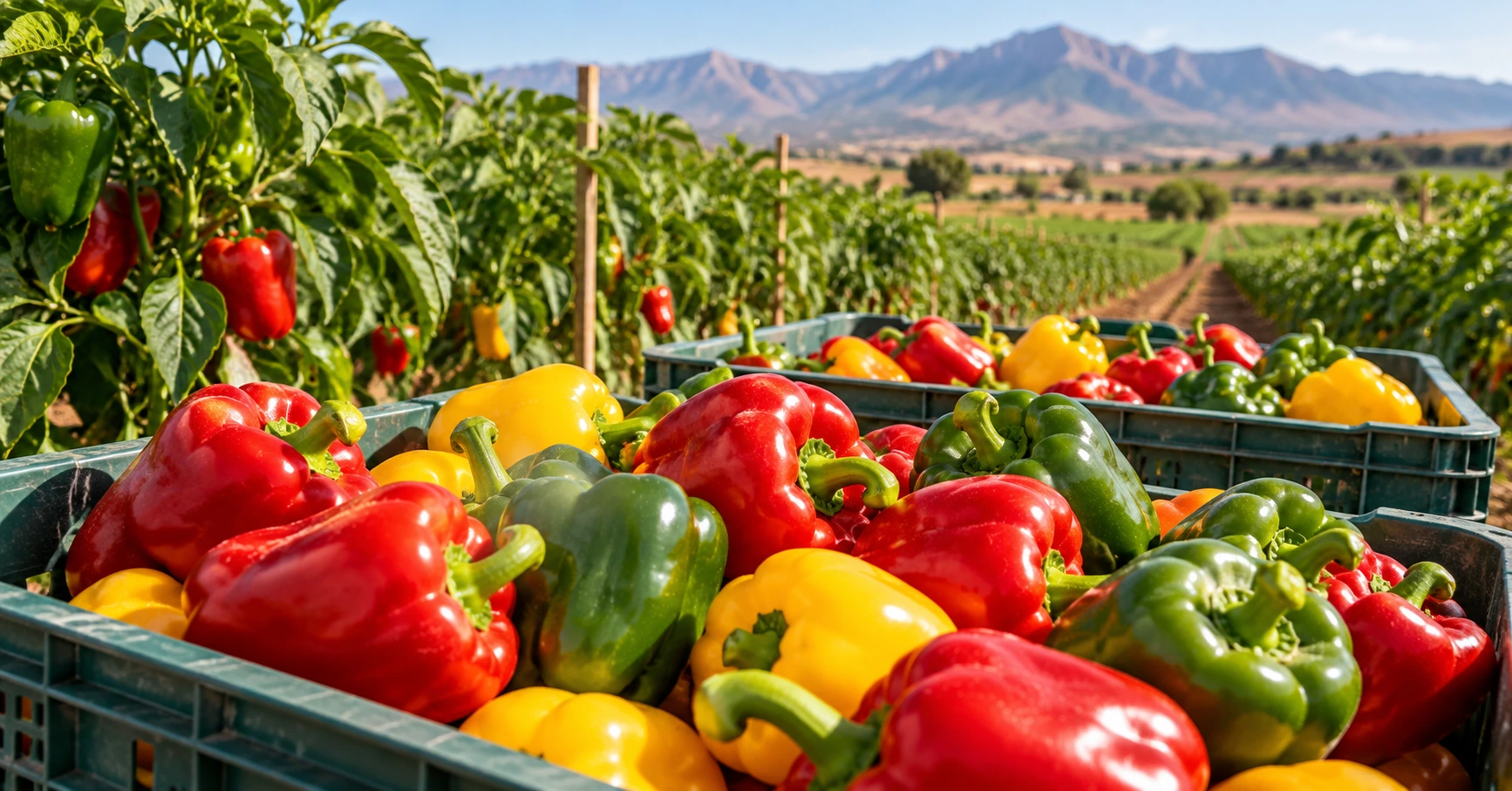
Sweet peppers are common in salads, grilled vegetable dishes and cooked preparations. Moroccan markets may offer green, red, yellow and other types, depending on variety and availability.
For wholesale orders, specify whether you require blocky bell peppers or another commercial type, the colour, size range, firmness, skin condition and acceptable variation. Mixed-colour cartons need a written colour ratio if the customer requires one.
Explore our Moroccan peppers product page for additional information.
6. Courgettes (zucchini)
Courgettes are widely used in Moroccan vegetable dishes, particularly couscous and tagines. They are often cooked with carrots, potatoes, turnips and other seasonal vegetables.
Importers should specify the desired length, diameter, colour, maturity and tolerance for marks or curvature. Courgettes can be sensitive to handling, so packaging and temperature management should be suitable for the actual product and route.
7. Aubergines (eggplants)
Aubergines are used in dishes such as zaalouk, a Moroccan cooked aubergine and tomato preparation. Different shapes and sizes may be offered in local markets.
For commercial enquiries, state the preferred variety or shape, size range, colour, firmness and acceptable external defects. If a buyer needs a uniform retail presentation, the specification should be more precise than “fresh Moroccan aubergines”.
8. Cucumbers
Cucumbers are frequently eaten raw in Moroccan salads. Wholesale buyers may require a particular commercial type, length, diameter, skin appearance or pack format.
Because cucumbers can be sensitive to temperature and moisture conditions, handling plans should reflect the specific variety and journey. Confirm the expected arrival quality and the customer’s preferred packaging before comparing offers.
9. Green beans
Green beans appear in Moroccan cooked vegetable dishes and can also be relevant to international wholesale sourcing. The phrase “green beans” can refer to different commercial pod types, so importers should be specific.
Requirements may include fine or extra-fine pods, length and diameter ranges, tenderness, colour, freshness, defect tolerances and retail or bulk packaging. An offer for one pod specification is not necessarily comparable with another.
10. Leafy greens and other seasonal vegetables
Moroccan households also use leafy vegetables and seasonal greens, including spinach-like greens, chard and herbs in a variety of regional preparations. Turnips, pumpkins, cabbage and other vegetables are also familiar in couscous and home cooking.
For international sourcing, these products require exact identification. Common or translated names can be ambiguous. Buyers should use the precise commercial name, botanical identification where necessary, and clear quality and packaging requirements.
Not all leafy products are suitable for the same transport routes or shelf-life expectations. Their availability and export feasibility must be checked separately.
What vegetables are used in Moroccan couscous and tagines?
Moroccan couscous is often associated with combinations of carrots, courgettes, turnips, pumpkin, cabbage and other vegetables, depending on region, season and household preferences. Tagines can include potatoes, onions, tomatoes, peppers, carrots, aubergines and many other ingredients.
These culinary examples help explain why certain vegetables are familiar in Morocco. They do not mean that every ingredient is cultivated for export or that a specific mix is available for international shipment at all times.
Which common Moroccan vegetables are relevant for export buyers?
For international importers, tomatoes and peppers are particularly relevant categories to investigate, while other vegetables may be sourced depending on supplier capability, market requirements and current availability. The buyer’s specification is more important than a general list of popular vegetables.
The USDA Foreign Agricultural Service publishes agricultural market information that can help buyers understand Moroccan production and trade context. Official customs and market statistics should be used when making claims about export volumes or rankings; this article does not present an unsupported ranking of the most-exported vegetables.
Browse our product categories and guide to importing Moroccan vegetables for practical sourcing considerations.
Where are vegetables grown in Morocco?
Morocco has several agricultural regions, and the relevant origin depends on the crop and production system. The Souss-Massa area is associated with intensive horticultural production, while other regions contribute to Morocco’s broader vegetable supply.
Regional conditions, irrigation, production systems and seasonal weather can affect timing and commercial availability. A region’s reputation is not proof that a particular lot comes from that location. Buyers should request the appropriate origin and traceability records for the actual goods.
Read our Moroccan agricultural regions guide for more background and our produce seasons guide for indicative planning windows.
Quality specifications for wholesale Moroccan vegetables
Before requesting a price, define the product’s variety, grade, size, maturity and acceptable defects. Buyers should also agree on inspection and arrival-condition expectations. “Export quality” is not a substitute for measurable requirements.
| Specification | Buyer question |
|---|---|
| Variety or commercial type | Which exact product is being quoted? |
| Grade and quality | Which standard and defect tolerances apply? |
| Calibre or size | What size range and uniformity are required? |
| Maturity and condition | What condition is expected at packing and arrival? |
| Traceability | What lot and origin records are available? |
| Inspection | How will the shipment be checked and discrepancies handled? |
For EU-bound produce, consult the European Commission’s fruit and vegetable marketing standards. Different vegetables can be subject to different standards, and additional customer requirements may apply.
Packaging and quantities for international orders
Packaging should protect the vegetable and suit the intended distribution channel. Depending on the commodity and buyer, options may include cartons, crates, bags or retail-ready packs. Actual feasibility must be confirmed for each order.
Specify net weight per carton, number of units, carton dimensions, pallet configuration, labels and any special handling needs. Buyers should compare quotations using the same net quantity and packaging specification.
There is no universal minimum order quantity for all Moroccan vegetables. Feasible volumes depend on the product, supplier, packing arrangement, timing and transport. For more detail, see our fresh produce export packaging guide.
Food safety, phytosanitary rules and import documentation
Destination-market rules must be verified for the exact vegetable. For EU buyers, relevant requirements can include food safety, pesticide maximum residue levels, plant-health controls, marketing standards, customs classification and origin evidence.
The European Commission’s Pesticides Database is a research tool for residue rules, while Access2Markets helps buyers investigate product-specific import measures. Morocco’s ONSSA is an official reference for relevant export-side controls.
Documents may include commercial invoices, packing lists, transport records, origin evidence and official certificates where required. Do not assume every vegetable needs the same documents or that a certification claim is valid without evidence.
How to request a wholesale quotation for Moroccan vegetables
A useful enquiry should include:
- Product: vegetable, variety, commercial type and intended use.
- Quality: grade, calibre, maturity and acceptable defects.
- Quantity: net kilograms, cartons or pallets and any recurring schedule.
- Packaging: format, net weight, labels and pallet configuration.
- Destination: importing country, receiving location and customer channel.
- Timing: preferred shipment or arrival period.
- Compliance: required records, inspections and verified certifications.
- Commercial terms: quotation currency, delivery basis and payment preferences.
Comparing prices without these details can be misleading. The same vegetable may cost differently because of its grade, size, packaging, quantity, season and delivery terms.
How MoroccanProduce.com works with international buyers
MoroccanProduce.com acts as the commercial seller to international buyers. We are not merely a supplier directory or intermediary introducing buyers to farms.
- Send your requirements. Share the product, quality, quantity, packaging, destination and timing.
- We research suitable suppliers. We investigate Moroccan supply options and proposed specifications.
- We prepare a quotation. The offer reflects available information and the proposed commercial terms.
- We confirm the transaction. Once terms are agreed, we arrange the purchase from the supplier and resale to the buyer.
Availability, documentation, certification evidence and logistics are assessed for each order. Learn more on our For Buyers page.
Frequently asked questions about common vegetables in Morocco
What are the most common vegetables in Morocco?
Tomatoes, potatoes, onions, carrots, peppers, courgettes, aubergines, cucumbers and green beans are familiar in Moroccan markets and cooking. The mix varies by region and season.
Which vegetables are used in Moroccan couscous?
Common choices include carrots, courgettes, turnips, pumpkin and cabbage, with variations depending on the recipe and region.
Are tomatoes grown in Morocco?
Yes. Tomatoes are an established Moroccan agricultural product and are also relevant to international fresh-produce trade. Specific varieties and export-ready availability must be confirmed.
What is zucchini called in Morocco?
The vegetable is commonly known in English as courgette or zucchini. Local names vary by language and dialect, so use the precise commercial product name in an import enquiry.
Can international buyers source all these vegetables from Morocco?
Not automatically. A vegetable’s popularity in domestic cooking does not guarantee that it is available in the requested export grade, quantity or season. Each enquiry needs a supply check.
How can I buy Moroccan vegetables wholesale?
Send the exact product, variety, quality, quantity, packaging, destination and preferred delivery window. MoroccanProduce.com can research suitable options and prepare a quotation based on available information.
Request a Moroccan vegetable wholesale quotation
Looking to buy tomatoes, peppers or another Moroccan vegetable for international distribution? Tell us your product specification, net quantity, packaging, destination and target delivery period. We will research suitable Moroccan sourcing options and prepare a commercial quotation based on the requirements and available information.