
Importing fruit from Morocco to Europe can be a practical sourcing option for wholesale distributors, importers, retail suppliers and foodservice businesses. But the transaction is not complete when a buyer finds attractive fruit and receives a price. The importer must check the product specification, plant-health rules, food safety, marketing standards, customs treatment, documentation and logistics before the shipment is accepted.
This guide focuses on fresh fruit from Morocco entering the European Union, with examples relevant to buyers in Spain, France and other EU markets. Requirements can differ for destinations outside the EU, including the United Kingdom and Switzerland, so they should not be treated as identical.
At MoroccanProduce.com, we research Moroccan sourcing options after receiving a buyer’s enquiry, purchase produce from Moroccan suppliers and resell it to international buyers under agreed commercial terms. We do not claim fixed inventory, guaranteed prices or certifications without verification.
Which Moroccan fruits can European importers source?
Morocco is associated with a range of fresh-fruit supply programmes. Buyers may enquire about citrus, berries, avocados, melons and other fruits depending on the season and requested specifications. Different products have different harvesting, handling and compliance needs.
| Fruit category | Key wholesale buying questions |
|---|---|
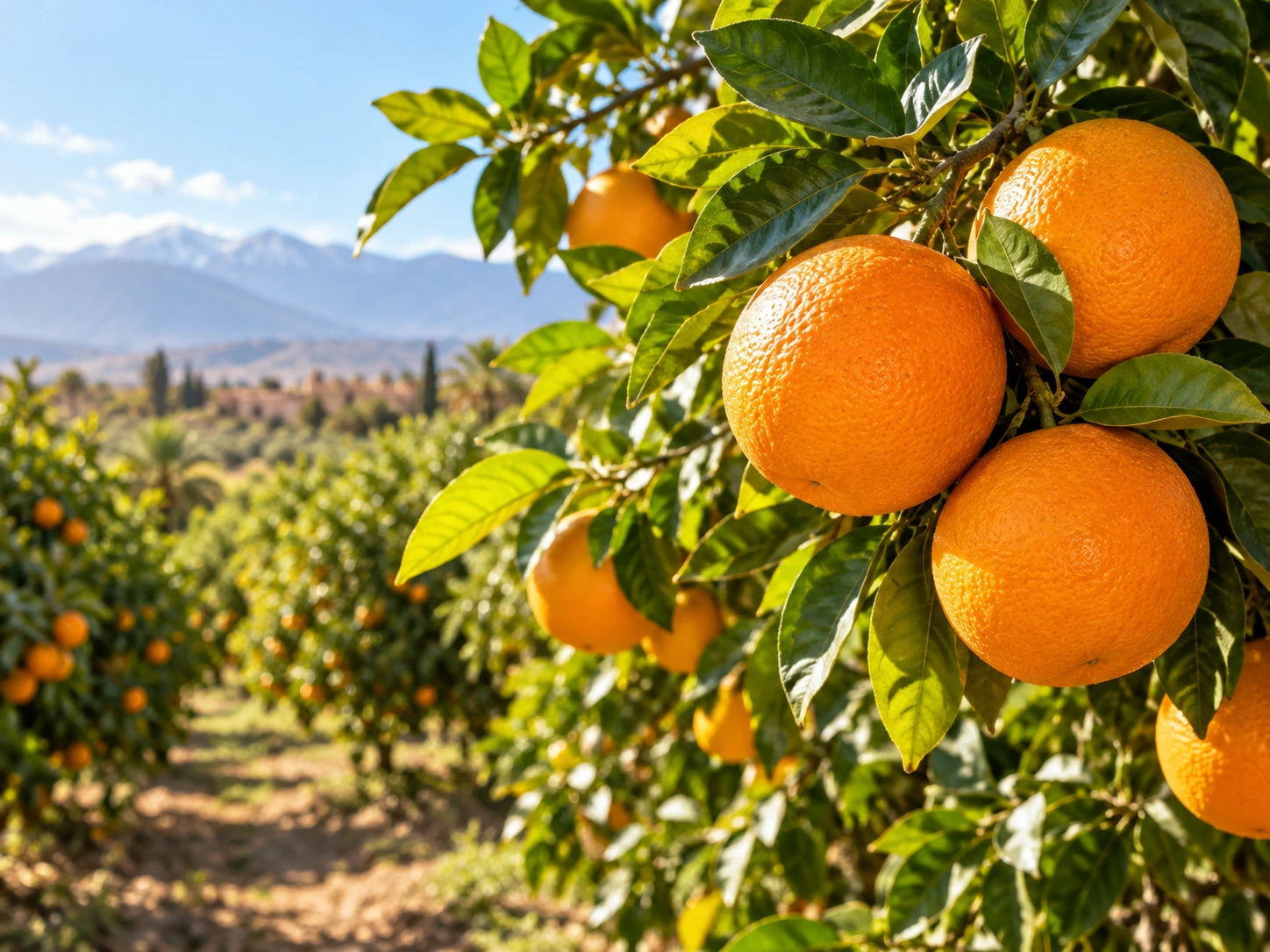
| Oranges and citrus | Variety, calibre, maturity, external quality, carton weight and any applicable citrus-specific plant-health measures. |
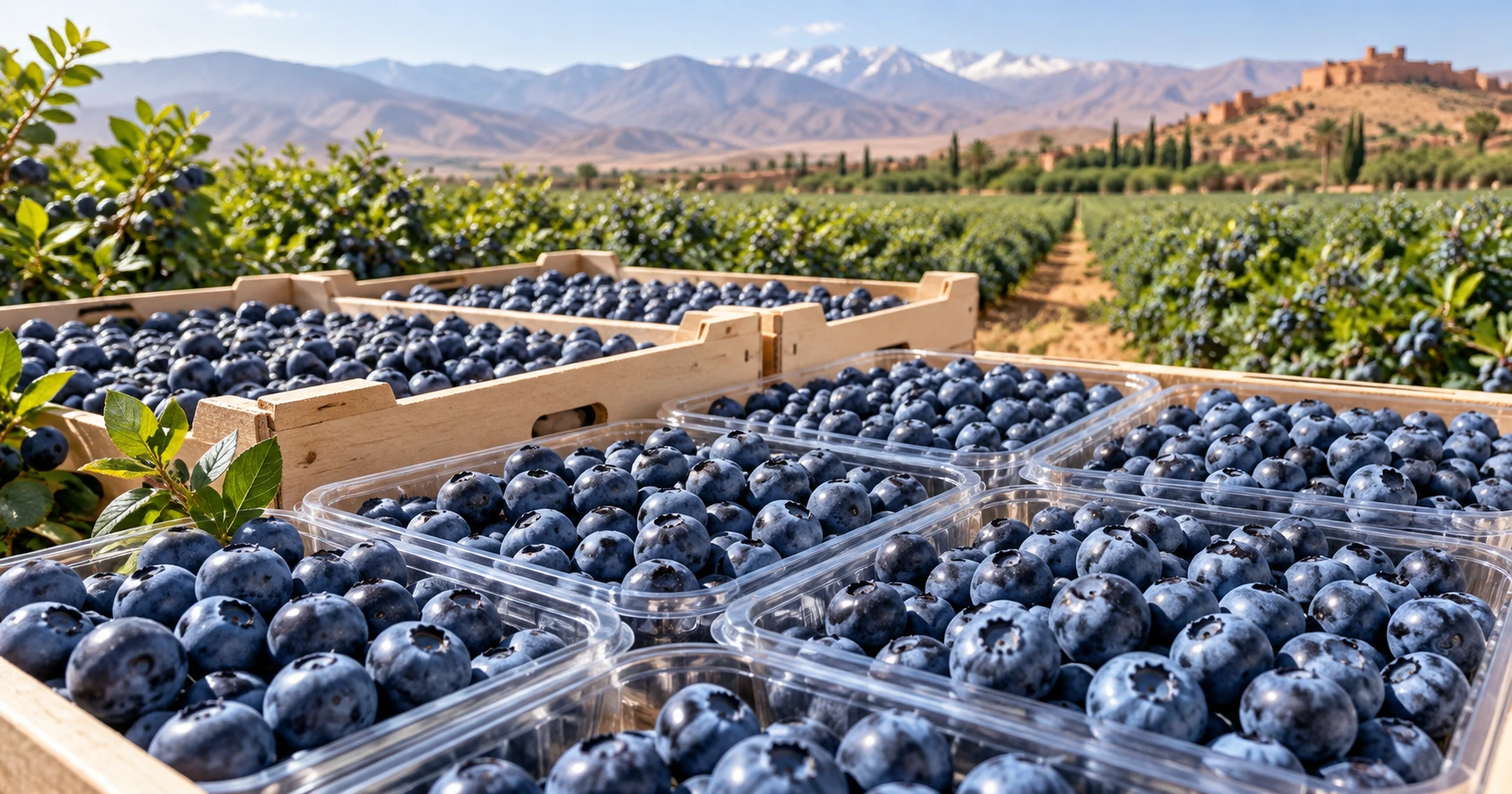
| Blueberries and raspberries | Fruit condition, retail pack size, cold-chain handling, shelf-life expectations and arrival quality. |
| Avocados | Variety, maturity, calibre, ripening programme, carton specification and transit conditions. |
| Melons and watermelons | Variety, weight range, maturity, packaging or palletisation and receiving condition. |
These are examples of product categories, not a live stock list. Check our Moroccan produce seasons guide for preliminary planning, then confirm actual availability for the shipment date and grade.
1. Define the product and your EU destination before checking regulations
The correct regulatory and customs answer depends on the exact fruit, whether it is fresh or processed, the destination country, the route and the transaction. Start with a detailed request for quotation (RFQ) rather than a general question such as “What does it cost to import fruit from Morocco?”
- Product: fruit type, variety, intended use and applicable customs classification.
- Specification: grade, calibre, maturity, colour, acceptable defects and requested inspection.
- Volume: net kilograms, cartons or pallets; one-time or recurring orders.
- Packaging: retail units or bulk cartons, net weights, labels and pallet configuration.
- Destination: EU member state, entry point, receiving address and intended sales channel.
- Timing: target dispatch or arrival window and handling constraints.
- Commercial conditions: delivery basis, payment terms and requested documents.
For example, a request for fresh Moroccan oranges delivered to a Spanish wholesale market is not identical to a request for blueberries packed in retail punnets for a French distribution centre. Both the commercial specification and the import checks need to reflect the actual goods.
2. Check EU phytosanitary requirements for fresh fruit
Plant-health controls aim to reduce the risk of harmful pests entering the EU. Under the EU plant-health framework, fresh fruits from non-EU countries generally require a phytosanitary certificate, unless a specific exemption applies. The European Commission lists five fruit exemptions from the general certificate requirement: pineapples, coconuts, durians, bananas and dates. These exemptions should not be extended to other fruit categories.
For a typical Moroccan citrus, berry or avocado consignment, importers should investigate the applicable certificate and inspection requirements for that precise product and origin. Additional pest-specific conditions or restrictions may apply.
The European Commission’s official plant-health rules and trade in plants from non-EU countries guidance explain the framework. Importers should also check current operational requirements with their EU plant-health authority and customs representative, including relevant border-control procedures and electronic notifications.
Who obtains the phytosanitary certificate?
Certificate issuance is a matter for the competent authority in the exporting country, following applicable official procedures. In Morocco, ONSSA (National Office for Food Safety) is an official reference for food-safety and relevant import/export controls. The commercial parties must agree who coordinates the necessary applications, inspection arrangements and document handover.
A supplier’s statement that fruit is “export quality” is not a substitute for a required official phytosanitary certificate. Equally, a certificate does not replace other food-safety, customs or marketing obligations.
3. Verify pesticide residue limits and food-safety compliance
Fresh fruit imported into the EU must comply with applicable EU food law. This includes the relevant maximum residue levels (MRLs) for pesticides, regardless of whether the fruit was grown inside or outside the EU. An MRL is a legal residue limit for a particular substance and food product; it is not a general statement that a shipment is pesticide-free.
Check the European Commission’s EU Pesticides Database for the fruit and relevant active substances. The Commission notes that its database is informational and that the Official Journal contains the legally authoritative texts. MRLs can change, so buyers should check current values for the actual product rather than relying on an old report.
What should buyers ask suppliers?
- What traceability and production information is available for the proposed lots?
- Which product-specific residue requirements apply to the intended EU market?
- Does the buyer require laboratory test results or a specific testing protocol?
- How will samples be linked to the lot that is actually shipped?
- Are there stricter retailer requirements beyond the EU legal minimum?
Do not assume that a laboratory result from one lot establishes compliance for every future shipment. If testing is required, define the scope, timing and acceptable evidence before confirming the order.
4. Check EU fruit and vegetable marketing standards
Food-safety compliance is not the same as commercial conformity. Fresh fruit marketed in the EU may also need to meet general or product-specific marketing standards covering quality, maturity, size, tolerances, presentation and marking.
The EU maintains specific marketing standards for certain fruits, including citrus fruit and strawberries, alongside a general standard for other covered products. Buyers should identify the correct standard for their fruit and review the exact requirements rather than applying one grade definition to every commodity.
The European Commission explains the framework in its fruit and vegetables marketing guidance and conformity-checks guidance. The latter also describes conditions under which authorities in non-EU countries may carry out recognized conformity checks before import.
Agree on quality before dispatch
Specify the required commercial class where applicable, size range, maturity, acceptable defects and receiving condition. A retailer may require stricter tolerances than the legal standard. Include those extra specifications in the contract instead of assuming that “Class I” alone covers every customer expectation.
5. Confirm customs classification, duties and preferential origin
The EU and Morocco have trade arrangements that can affect customs treatment, but not every fruit enters duty-free. Applicable rates may depend on the commodity code, preferential origin, quota availability, season and, for certain products, entry-price provisions.
For example, fresh oranges and clementines are among the agricultural products addressed by seasonal or entry-price arrangements in the EU–Morocco trade framework. This does not mean every orange or clementine shipment receives the same duty rate.
Use the European Commission’s Access2Markets My Trade Assistant to research the precise product code, origin, destination, tariffs and import procedures. Your customs broker should confirm the current tariff treatment before the shipment is priced or dispatched.
Origin documents and preferential treatment
A claim of preferential customs treatment depends on meeting the applicable rules of origin and providing the required evidence. “Shipped from Morocco” is not always the same as “qualifies as originating in Morocco” for customs purposes. Confirm the relevant origin rule and accepted proof for the specific transaction.
If an offer includes an assumed preferential tariff, ask the seller and customs representative to identify the basis for that assumption. Where quotas or seasonal measures are relevant, confirm their current status instead of applying last year’s figures.
6. Prepare the commercial and transport documents
The document package depends on the commodity, shipment and destination. Common commercial records may include an invoice, packing list, transport document and origin-related information, plus the official certificates required for the product. Other documents may be requested by a bank, insurer, carrier, importer or retailer.
| Document or record | Purpose to clarify |
|---|---|
| Commercial invoice | Seller, buyer, product, price, currency and transaction details. |
| Packing list | Carton and pallet counts, net and gross weights, product identification. |
| Transport document | Shipment details and evidence relevant to the chosen transport mode. |
| Phytosanitary certificate | Official plant-health documentation when required. |
| Origin evidence | Information or proof needed for customs and any preferential claim. |
| Traceability and inspection records | Lot identification and agreed quality or safety checks. |
Before loading, agree on who prepares each document, who checks it for consistency, and who submits any required customs or plant-health declarations. Inconsistencies between the invoice, packing list, certificate and physical consignment can create delays.
7. Manage traceability, labels and packaging
EU food law includes traceability obligations for relevant food businesses. The European Commission’s Access2Markets food-law guidance outlines requirements for imported food and traceability. Buyers should identify the records needed for their role and ensure they can link received fruit to the relevant commercial lots and suppliers.
Packaging and marking requirements differ by fruit, pack format and intended customer. Ask about:
- Net weight and number of units per carton or retail pack.
- Origin, product description, commercial class and calibre where required.
- Lot codes and other traceability identifiers.
- Carton strength, ventilation and pallet configuration.
- Language, barcode and private-label requirements of the receiving market.
Do not assume that a carton designed for oranges is suitable for raspberries. Berries, citrus, avocados and melons have different handling sensitivities and presentation requirements.
8. Plan transport and arrival-quality checks
Fresh fruit can deteriorate during delays, unsuitable temperature management or rough handling. The right transport protocol depends on the commodity, variety, maturity, packaging, transit duration and receiving process.
For berries, buyers often place particular emphasis on rapid handling and controlled conditions. For avocados, maturity and the intended ripening programme are central. For citrus, packing condition, ventilation and route planning may be especially relevant. These are practical examples, not universal temperature instructions.
Agree on loading condition, expected transit route, handover points, temperature monitoring if needed and the procedure for reporting delays. Define how the buyer will inspect the goods on arrival and document any claims. The seller, carrier and buyer should understand their respective responsibilities.
9. Compare landed costs, not only the fruit price
When comparing quotations, ask what the unit price actually includes. A low price per kilogram may exclude packaging, freight, insurance, official checks, customs clearance, duties, handling and final delivery.
Specify the agreed Incoterms® rule and named place, where used. An Incoterms® rule helps allocate certain costs, risks and delivery obligations, but does not replace the sales agreement or determine every legal responsibility.
A useful comparison should show the same fruit specification, net weight, packaging, delivery basis and expected documentation. Buyers should also allow for the commercial impact of arrival-quality disputes, delays and rejected goods.
10. How MoroccanProduce.com supplies European wholesale buyers
MoroccanProduce.com is a direct commercial seller to international buyers. Our role is to research appropriate Moroccan supply options, buy from Moroccan suppliers and resell to the buyer under agreed terms.
- Send your enquiry. Identify the fruit, variety, quantity, quality, packaging, destination and timing.
- We research sourcing options. We assess available Moroccan suppliers, product specifications, potential documentation and costs.
- We prepare a quotation. We describe the proposed product and commercial terms based on the information available.
- We confirm the order. Once the terms are agreed, we arrange the supplier purchase and resale under the confirmed transaction.
Availability, certification evidence, official documents and logistics arrangements are verified for each order. Learn more about the process on our For Buyers page.
Pre-shipment checklist for EU fruit importers
- Confirm fruit type, variety, grade, calibre and maturity.
- Check the exact EU product classification and import requirements.
- Verify whether phytosanitary certification and border checks apply.
- Review relevant EU pesticide MRLs and any buyer testing requirements.
- Confirm marketing standards and packaging or marking rules.
- Agree on traceability and required lot records.
- Check customs duties, quotas, entry-price provisions and origin evidence.
- Agree on the invoice, packing list, transport and official documents.
- Confirm transport, receiving inspection, payment and claims procedures.
- Reconfirm actual availability, pricing and dispatch arrangements.
Frequently asked questions
Can I import fresh fruit from Morocco into Spain or France?
Fresh Moroccan fruit may be imported into EU countries when the shipment meets applicable EU and national requirements. The exact plant-health, food-safety, customs and marketing checks depend on the product and transaction.
Do I need a phytosanitary certificate for Moroccan fruit?
EU plant-health rules generally require one for fresh fruit from non-EU countries, subject to specified exemptions and any applicable special measures. Confirm the requirements for your precise fruit and origin before shipping.
Are Moroccan fruits exempt from EU import duties?
Not automatically. Trade preferences can apply, but rates may depend on the product code, rules of origin, seasonal arrangements, quotas or entry prices. Check the current treatment through Access2Markets and your customs broker.
Do EU pesticide limits apply to fruit grown in Morocco?
Yes. Relevant EU maximum residue levels apply to fruit placed on the EU market, including imported products. Buyers should check the current rules for the specific fruit and pesticide substance.
What documents should I request from a Moroccan fruit seller?
Typically start with a commercial invoice, packing list, transport information, origin-related records and any official certificates required for the product. The final list depends on the destination and agreed transaction.
Can MoroccanProduce.com quote fruit for a European wholesale buyer?
Yes. Send your product, volume, quality, packaging, destination and delivery requirements. We will research suitable Moroccan supply options and prepare a quotation based on the available information and proposed commercial terms.
Request a wholesale Moroccan fruit quotation
Looking to source fresh Moroccan fruit for the European market? Tell us which products you need, your approximate quantity, quality specifications, packaging format, destination and target delivery window. MoroccanProduce.com will research suitable sourcing options and prepare a quotation based on your enquiry.