
When is Moroccan citrus season? For international wholesale buyers, Morocco’s main citrus sourcing campaign generally starts in autumn and continues into spring, while certain late orange varieties can extend into early summer. The exact Moroccan citrus season depends on the product: clementines, mandarins, Nadorcott, Navel oranges, Valencia or Maroc Late oranges, and lemons do not share one identical harvest calendar.
Importers should treat seasonal dates as planning windows, not guarantees of stock. Fruit maturity, weather, calibre, packing capacity, demand and destination requirements can shift the commercial opening and closing dates each year.
This guide explains the likely buying windows, varieties, quality specifications, packaging, export documents and quotation details that matter to international importers and distributors. MoroccanProduce.com researches Moroccan supply options, purchases produce from Moroccan suppliers and resells it to international buyers under agreed commercial terms; we do not claim owned orchards, fixed inventory or guaranteed shipment capacity.
Moroccan citrus season calendar: month by month
The following calendar combines typical commercial windows reported by Moroccan citrus businesses with USDA trade context. It is an indicative guide, not a verified availability schedule for a specific supplier or the 2026/27 campaign.
| Month | Typical citrus sourcing focus | Buyer planning note |
|---|---|---|
| September | Pre-season enquiries; some lemon programmes may operate | Request maturity and opening-date confirmation. |
| October | Early clementines and some green or early citrus | Check variety, colour and minimum maturity. |
| November | Clementines, early mandarins and some oranges | Compare packing formats and initial export availability. |
| December | Clementines, mandarins, Navel and other oranges | Core winter purchasing period for several categories. |
| January | Oranges, late clementines, Nour and Nadorcott | Confirm variety transitions and calibre. |
| February | Nadorcott, other mandarins and oranges | Review late-season fruit condition and demand. |
| March | Late mandarins and oranges | Check remaining lots, quality and price validity. |
| April | Some late mandarins and oranges | Do not assume early varieties remain available. |
| May | Late orange varieties where available | Ask specifically about Valencia or Maroc Late. |
| June–July | Potential late orange programmes | Availability depends strongly on variety and supplier. |
| August | Generally outside the main soft-citrus campaign | Verify any Moroccan-origin offer carefully. |
The USDA Foreign Agricultural Service overview of Moroccan fruit exports describes mandarin exports as concentrated largely from October to April, with orange export activity extending later in the year. Moroccan industry calendars also show different windows for early clementines, Nadorcott and late oranges. Actual fruit available to buy in a given month must be checked separately.
When are Moroccan oranges in season?
Moroccan orange season spans several varieties rather than one fixed harvest period. Buyers may encounter Navel-type oranges and other earlier varieties during the winter campaign, while Valencia and Maroc Late can support later-season enquiries. Typical export-oriented calendars place many orange programmes from approximately November or December into spring, with some late varieties potentially available into summer.
Navel and early orange programmes
Navel oranges are commonly considered for fresh consumption. For a wholesale enquiry, specify variety where possible, calibre, external appearance, maturity, juice characteristics and the destination’s quality requirements. The availability of a particular size or grade is not guaranteed simply because the general orange season has begun.
Valencia and Maroc Late oranges
Late orange varieties are relevant when buyers need fruit beyond the core winter window. Some Moroccan commercial calendars describe Valencia Late programmes extending into June or July. However, late-season timing, condition and commercial availability depend on the crop year and supplier.
Explore our Moroccan oranges product page for the product overview, then submit a detailed request for a current quotation.
Moroccan clementine season: the autumn and winter window
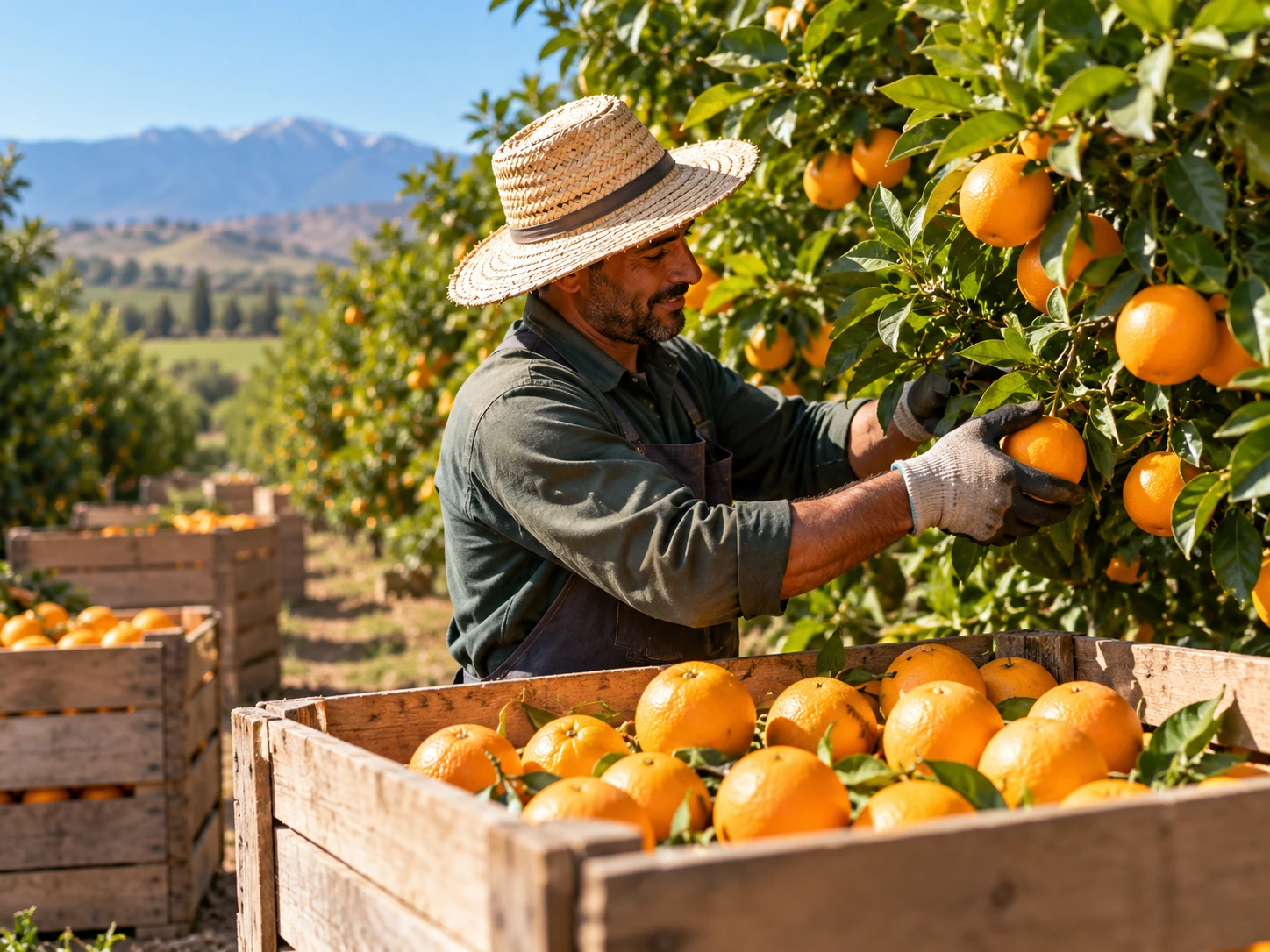
Clementines are among the citrus categories associated with Morocco’s autumn and winter export programme. Early clementine varieties can enter the market around October, with various programmes continuing through December, January or later depending on the cultivar.
Buyers should specify the exact variety when relevant, whether the customer expects easy-peeling fruit, acceptable seed content, size range, external colour and preferred packing format. Terms such as “clementine” and “mandarin” are sometimes used loosely in trade, so the written specification should identify the commercial fruit actually required.
For clementines, ask how the seller will document maturity and grade and what tolerance is acceptable for skin blemishes, dehydration, damage or uneven colour. Agree on the quality condition expected at destination, not only at packing.
Moroccan mandarin season: Nour, Nadorcott and other late varieties
Mandarin programmes help extend the easy-peeler season after some early clementines finish. Commercial calendars often place Nour in winter and Nadorcott/Afourer broadly from January into April. These are approximate windows, not interchangeable product names or guaranteed export dates.
| Type or variety | Indicative commercial window | What to specify |
|---|---|---|
| Early clementines | Often October–January | Named variety, calibre, colour and pack format. |
| Nour mandarin | Often December–February | Fruit identity, size, maturity and grade. |
| Nadorcott / Afourer | Often January–April | Variety, seed expectations, calibre and presentation. |
| Ortanique and other late hybrids | Can extend into spring | Exact commercial type and customer acceptance. |
The windows above reflect examples from Moroccan commercial sourcing calendars, including a Moroccan citrus producer’s published variety calendar. They do not verify that MoroccanProduce.com has those products in stock or that any named variety will be available for a specific order.
Are Moroccan lemons and grapefruit available in the same season?
Lemons and grapefruit should be treated as separate purchasing categories. Moroccan lemon supply can have a different seasonal pattern from clementines or oranges, and some growers or traders may offer more than one sourcing window. Grapefruit programmes may concentrate more heavily in cooler months, depending on variety and origin.
Do not assume year-round availability, uniform sizing or fixed quantities for either product. A buyer should request the exact type, preferred calibre, required net weight, quality specification and delivery period, then ask for a dated quotation.
Where does Morocco grow citrus?
Morocco’s citrus sector includes production areas such as Souss-Massa and Gharb, alongside other growing regions. Regional differences in climate, orchard practices and crop timing can affect commercial supply windows. The USDA identifies Souss-Massa and Gharb among important orange-producing areas.
For a buyer, a regional name is useful background but does not replace traceability. Ask what origin and lot records can be supplied for the specific goods. Read our Moroccan agricultural regions guide for additional geographic context.
How to plan a citrus purchasing programme around the season
A purchasing calendar should reflect your customer’s requirements and the transition between varieties. Buyers planning multiple deliveries may need one specification for early clementines, another for winter mandarins and a separate one for late oranges.
- Plan ahead. Identify the varieties, quantities and delivery windows needed by your customer.
- Allow alternatives. Decide whether a different variety, calibre or packing format would be acceptable if the first option is unavailable.
- Request dated availability. Confirm which lots and grades are actually being offered for the intended week.
- Reconfirm recurring orders. A single seasonal quotation should not be treated as a guarantee of unchanged price or quality for every future shipment.
- Coordinate delivery. Align packing, documents and transport with the buyer’s receiving schedule.
Our Moroccan produce seasons overview can help you compare citrus with other fresh-fruit categories.
What quality specifications should citrus importers request?
Seasonality alone does not establish whether a shipment will meet your customer’s expectations. Agree on a written quality specification before comparing offers.
Variety, calibre and grade
Specify the fruit type, named variety when known, required size or calibre, commercial class and acceptable variation. If importing into the EU, fresh citrus may be subject to the specific marketing standard for citrus fruit under Commission Delegated Regulation (EU) 2023/2429. The detailed rules cover quality, maturity, classes, sizing, tolerances, presentation and marking.
Maturity, juice content and external condition
Depending on the fruit and market, buyers may need to consider juice content, sugar-to-acid balance, colour and overall maturity. Discuss skin damage, decay, pest damage, dehydration, cleanliness and any customer-specific tolerances. Do not rely solely on the word “premium”.
Traceability and inspection
Ask how the shipment will be identified by lot and which origin, packing and transaction records can be provided. Agree on inspection timing, evidence for any claims and the condition expected at delivery. Certification claims should be supported by valid evidence relevant to the actual product and facility; they must never be assumed.
Citrus packaging, labels and transport requirements
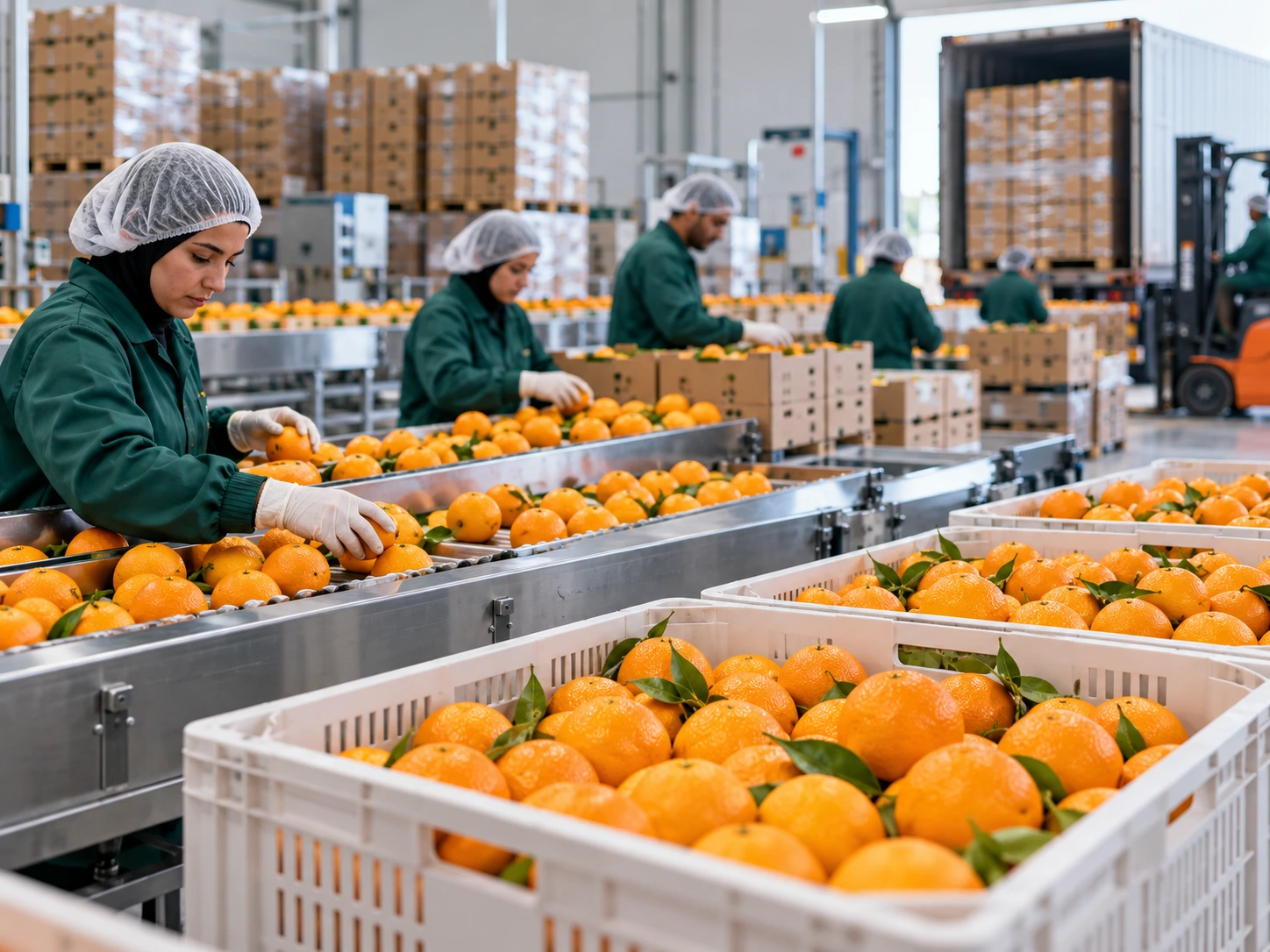
Packaging can affect protection, presentation, ventilation and the total landed cost. Confirm carton or net-bag format, net weight, calibre presentation, label information, pallet configuration and any private-label requirements.
| Packaging or transport item | Buyer question |
|---|---|
| Carton or retail unit | What net weight and presentation will be supplied? |
| Size distribution | Which calibre range and tolerance are included? |
| Labels and origin | Which particulars and lot identifiers are required? |
| Pallet configuration | How many cartons per pallet and what stacking arrangement? |
| Temperature management | What handling plan is suitable for this fruit and journey? |
| Receiving inspection | How will discrepancies be recorded and resolved? |
There is no single transport setting that is right for every citrus fruit, variety and journey. Agree on the appropriate handling protocol with the seller and logistics provider rather than accepting an unexplained guarantee of perfect freshness.
Export documents and destination-market requirements
For EU-bound fresh citrus, buyers should check plant-health requirements, food safety, pesticide residue limits, marketing standards, customs classification, origin rules and any product-specific measures. Certain citrus products can be subject to additional plant-health conditions; requirements must be verified for the actual fruit and destination.
Morocco’s National Office for Food Safety (ONSSA) is an official reference for relevant export controls. EU buyers can use the European Commission’s Access2Markets My Trade Assistant to research customs and product-specific import procedures. Your customs representative and competent authorities should confirm current rules before dispatch.
A shipment may need commercial invoices, packing lists, transport documents, origin evidence, phytosanitary certification and other records depending on the transaction. A generic document list does not establish that a specific consignment is compliant.
How to compare wholesale Moroccan citrus quotations
Ask suppliers or sellers to quote against the same written specification. The price should identify the citrus type and variety, class, calibre, net quantity, packaging, currency, delivery basis and quotation validity.
Clarify who arranges freight, insurance, inspections and required documents. If an Incoterms® rule is used, agree on the rule and named place. Seasonal price fluctuations, packing costs and changes in available calibres can affect the final offer.
A low price for a different variety or size range is not a like-for-like comparison. For recurring purchasing programmes, confirm how later shipment prices and specifications will be agreed.
How MoroccanProduce.com handles wholesale citrus enquiries
MoroccanProduce.com works as the direct commercial seller to international buyers. We do not simply introduce buyers to a farm or promise an unverified catalogue of available fruit.
- Send your citrus requirements. Share the fruit type, variety, quality, quantity, packaging, destination and target delivery window.
- We research Moroccan supply. We assess relevant suppliers, proposed specifications, availability and purchasing costs.
- We prepare a quotation. The offer describes the proposed product and commercial conditions based on available information.
- We confirm the transaction. Once terms are agreed, we arrange the supplier purchase and resale to the international buyer.
Specific documents, certification evidence, logistics arrangements and availability are assessed for each order. For more details, see our For Buyers page.
Frequently asked questions about Moroccan citrus season
When does Moroccan citrus season start?
Early clementine programmes can begin around October. Other citrus categories, including oranges and late mandarins, may start later. The actual opening date depends on variety and maturity.
When is Moroccan orange season?
Many orange programmes are associated with winter and spring, with some late varieties such as Valencia or Maroc Late extending into early summer. Availability varies by supplier and crop year.
When are Moroccan clementines in season?
Early clementines often appear in October, with commercial programmes continuing through winter depending on variety. Confirm the exact type, grade and shipment week.
What is the Moroccan Nadorcott season?
Nadorcott/Afourer is commonly associated with the later mandarin window, often approximately January to April. These are indicative dates, not a stock guarantee.
Can I source Moroccan citrus all year?
Do not assume that every citrus type is available year-round. Different varieties extend the overall campaign, but individual products have limited commercial windows and must be confirmed for each order.
Does MoroccanProduce.com offer fixed citrus prices?
No fixed prices are promised on this page. We research suitable Moroccan supply options and quote based on the requested product, grade, volume, packaging, timing, destination and commercial terms.
Request a wholesale Moroccan citrus quotation
Planning to source Moroccan oranges, clementines, mandarins or other citrus for your wholesale business? Tell us the fruit type, preferred variety, quantity, calibre, quality, packaging, destination and delivery window. MoroccanProduce.com will research suitable options and prepare a quotation based on the information available.